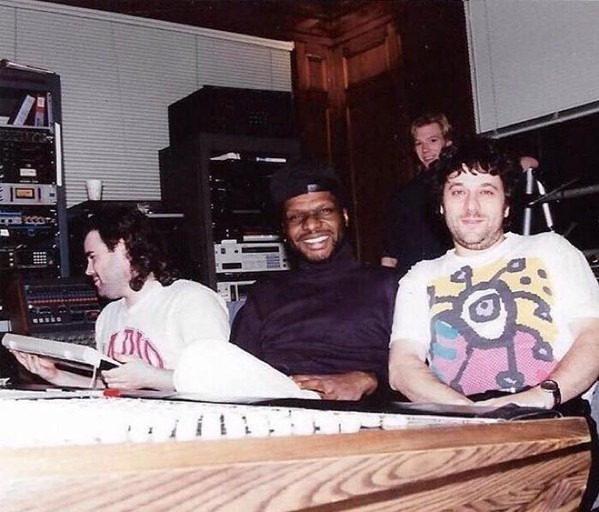
Back in the ’90s — the absolute golden age of NY house — if you wanted the ultimate, top-tier sound, you went to Axis Studios.
Founded by the legendary François K (François Kevorkian), this recording space was in a league of its own. People even called it the “Axis Sound” because the music coming out of there was so unbelievably crisp, deep, and pure — it felt like every single impurity had been completely scraped away.
Plus, it wasn’t just a studio; it was the ultimate hangout spot and creative hub where basically every major DJ in New York would drop by regularly.
Even though Kevorkian gives tons of interviews as a DJ or producer, he rarely talks about Axis Studios himself, so a lot of people nowadays might not even recognize the name.
But you really can’t ignore the massive role this studio played in house music history. Think about it: house heads have been completely obsessed with pristine sound quality and crystal-clear acoustics ever since the days of The Loft and Paradise Garage.
Plus, looking back at how NY house exploded right in that tight Manhattan scene during its golden era — and how underground club music eventually crossed over into major mainstream pop — Axis Studios was right at the absolute center of it all.
Let’s dive into the history and the sound of Axis Studios.
Sounds from Axis Studios
1. Intro(1977)
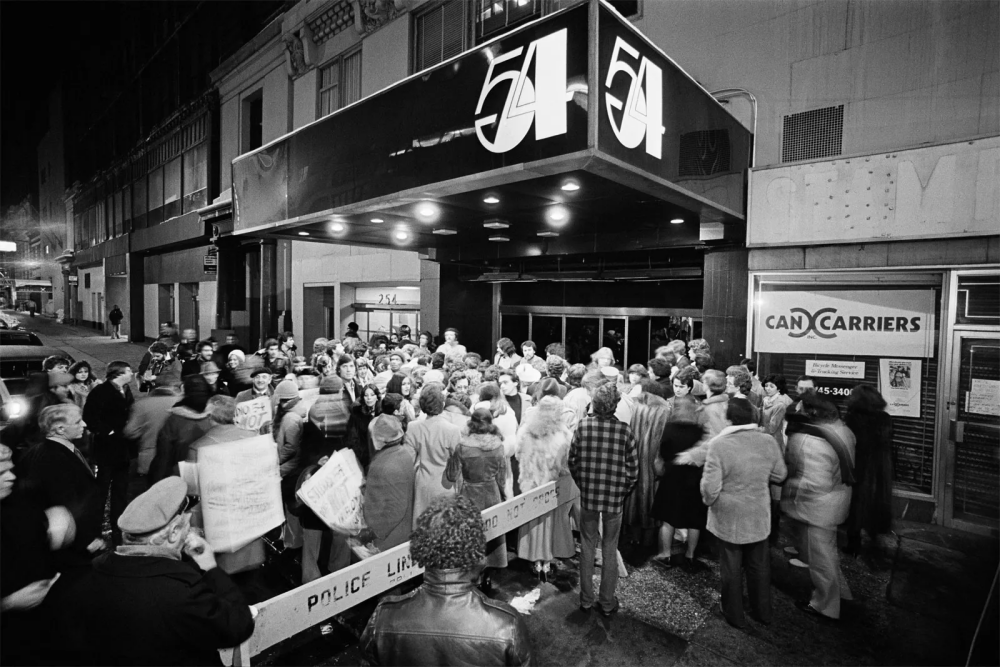
In 1977, Studio 54 opened on West 54th Street in Midtown Manhattan. Founded by Steve Rubell and Ian Schrager, this legendary disco — which has been the subject of movies and documentaries — was the ultimate symbol of NY culture, where celebrities like Andy Warhol, Mick Jagger, and Grace Jones gathered.
This 17-story Victorian-style building was designed by Italian architect Eugene De Rosa and built as the Gallo Opera House in 1927. After being used as a casino, music hall, and CBS’s TV Studio 52, Studio 54 took over the massive, three-story hall.
Inside the Wildest Club of 1970s New York: Studio 54
Even before it became a disco, the upper floors of this building were rented out as corporate offices. Because of its prime location, big-name companies like Viacom, Morgan Stanley, and Equinox moved in.
Industry giants like See-Factor Industries — who handled sound and lighting for stadium and arena-sized live events — were also based in the building, along with Broadway Rehearsal Studios, which served the opera theater below.
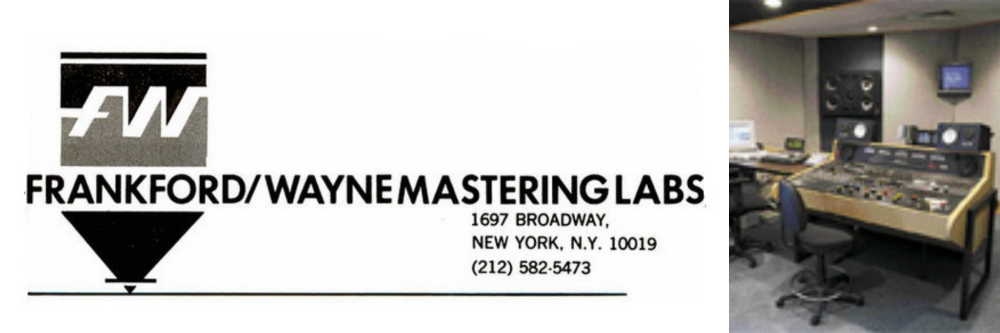
On the south side of the block sat the building housing Frankford/Wayne Mastering Labs, known for mastering, cutting lacquers, and making acetate records. This entire block was the ultimate symbol of the NY entertainment industry.
In 1984, a French guy named Francois Kevorkian started renting the small penthouse on the very top floor of this building.
He came over from France as a drummer and broke into the ’70s disco scene by drumming live right next to the DJ. Once he figured out how disco rhythms and arrangements worked, he started making his own tape edits, cutting them onto dubplates to play out. That hands-on approach is exactly what made him stand out as both a DJ and a remixer.
In 1978, he became the A&R for Prelude Records and doubled as the label’s go-to remixer. By 1982, he went freelance, and in 1983, he even stepped away from his DJ residency at the Paradise Garage to focus entirely on his studio remix work.
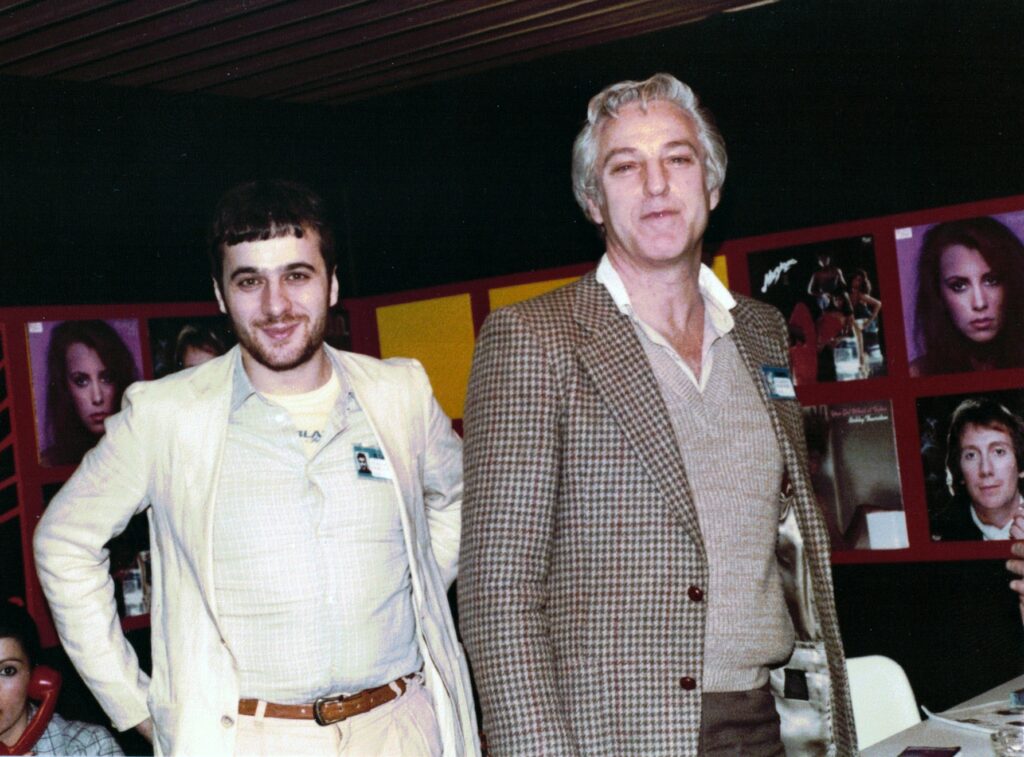
(Photo taken at the Prelude booth during MIDEM in Cannes, France Jan. 1980)
With high-profile artists like U2, Mick Jagger, and Kraftwerk knocking on his door, he became the biggest — and highest-paid — remixer in the business. He worked on over 1,500 remixes between ’78 and ’87, which is likely how he saved up the money to build his own studio.
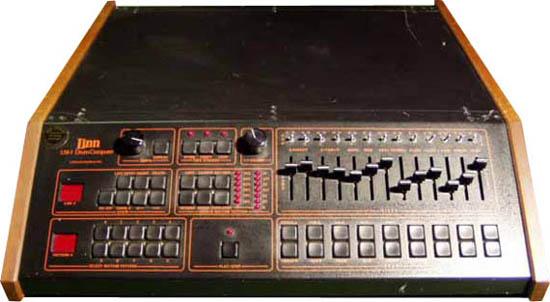
Kevorkian calls two professional digital drum machines total epoch-making pieces of electronic music gear: the Oberheim DMX, released in 1981, and the LinnDrum LM-1, developed by Roger Linn in 1982.
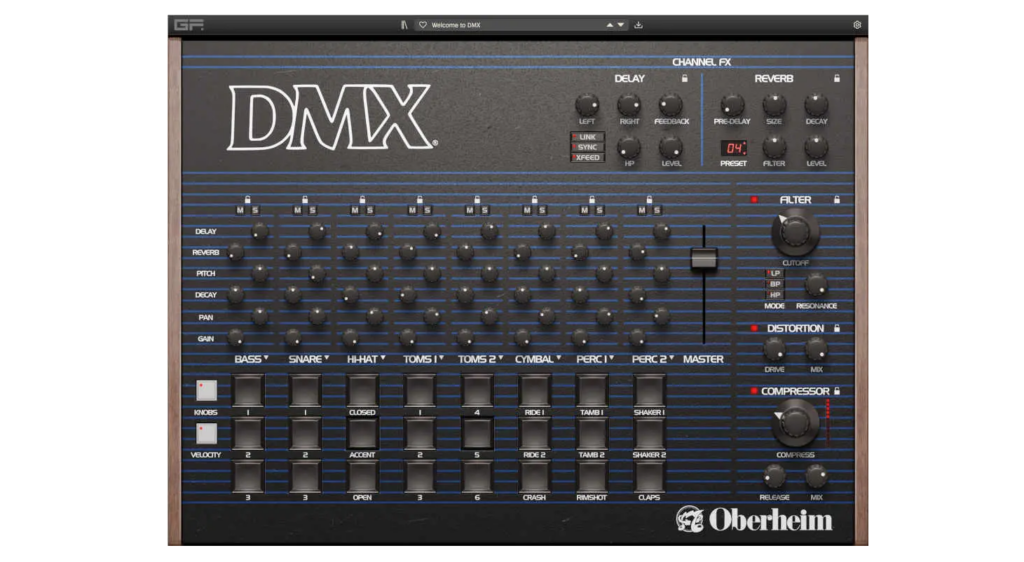
The Oberheim drum machine drove ’80s hip-hop, used by heavyweights like Run-D.M.C. and The Beastie Boys. It was also featured in “Blue Monday” by New Order — the band formed by Joy Division’s remaining members after Ian Curtis passed away — and the track became a defining anthem for synth-pop and Euro-disco.
Meanwhile, the LinnDrum was a game-changer because it could load digital samples. Thanks to how fast and precise you could program it, the machine quickly became a staple in mainstream music.
2. Verse(1983)
In 1983, the music industry underwent a massive shift when rival manufacturers like Roland, Moog, and Oberheim finally unified under the MIDI standard. Almost overnight, drum machines, synths, samplers, and computers like the Atari ST were all rolling out gear that could finally talk to each other.
At the time, New York was packed with recording spaces, but almost all of them were built strictly for rock bands.
Over in Midtown near Times Square, Unique Recording Studios changed the game. Having been around since 1978, Unique stepped up in ’83 by launching Studio C — a room dedicated entirely to this new wave of electronic production.
This Studio C was the world’s very first MIDI-exclusive recording room. It housed 30 synthesizers, had dedicated spaces for sequencers and interfaces, and made wiring effortless with wall jacks, earning it the nickname “MIDI City.”
Kevorkian, who already sensed the coming era of electronic music, did a lot of his remix work right there in “MIDI City”.
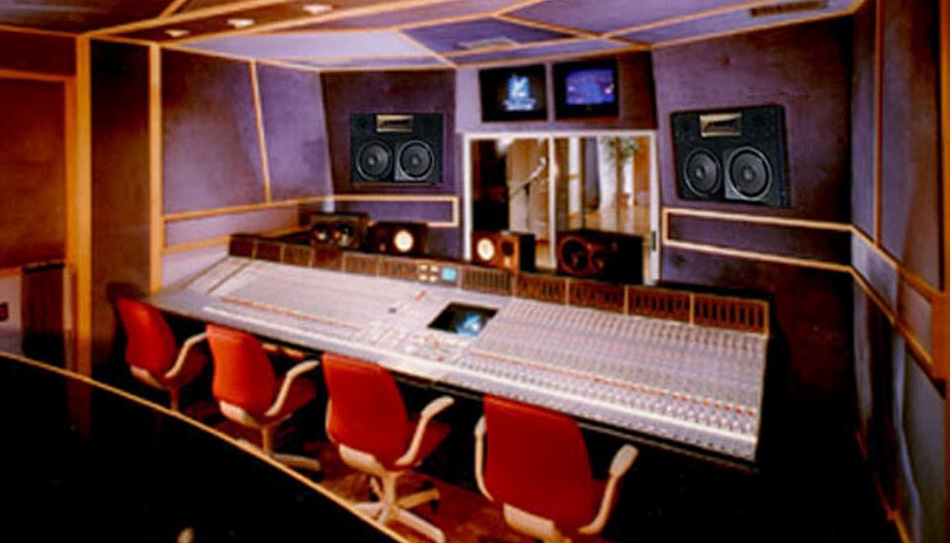
Using Unique Recording’s “MIDI City” as his blueprint, Kevorkian built Axis Studios, setting it up right on the 16th and 17th floors of the exact same building as Studio 54.
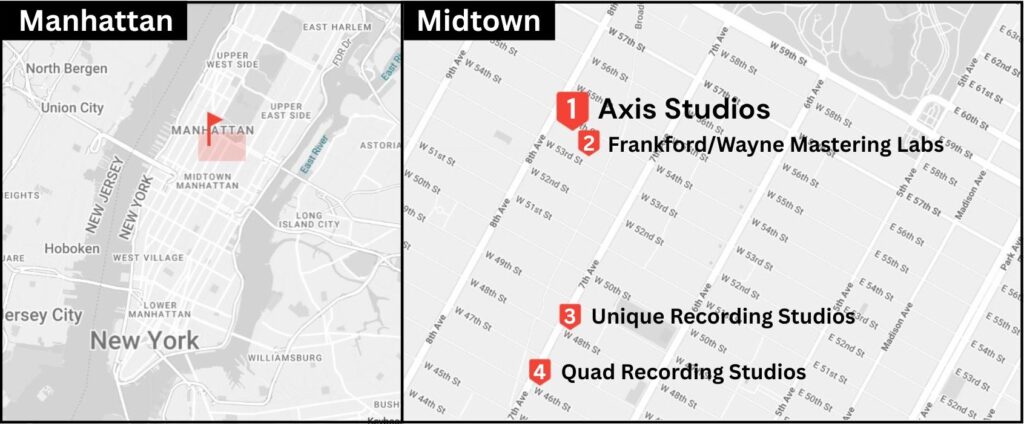
In 1984, he carved out his own space by renting the small penthouse on the 17th floor, setting up his trusty Oberheim DMX and LinnDrum LM-1. Initially, it functioned purely as Kevorkian’s private sanctuary. For the next three years, he used the room strictly for his own remix work while gradually hoarding gear and customizing the interior.
To elevate it into a professional commercial facility, he invested heavily in serious hardware. He brought in mixing consoles from SSL (Solid State Logic) 4000G+ and Amek, 24-track tape machines from Studer and Mitsubishi, and a towering rack of outboard gear — the physical dynamic processors and EQs that served as the direct hardware ancestors to today’s software plug-ins.
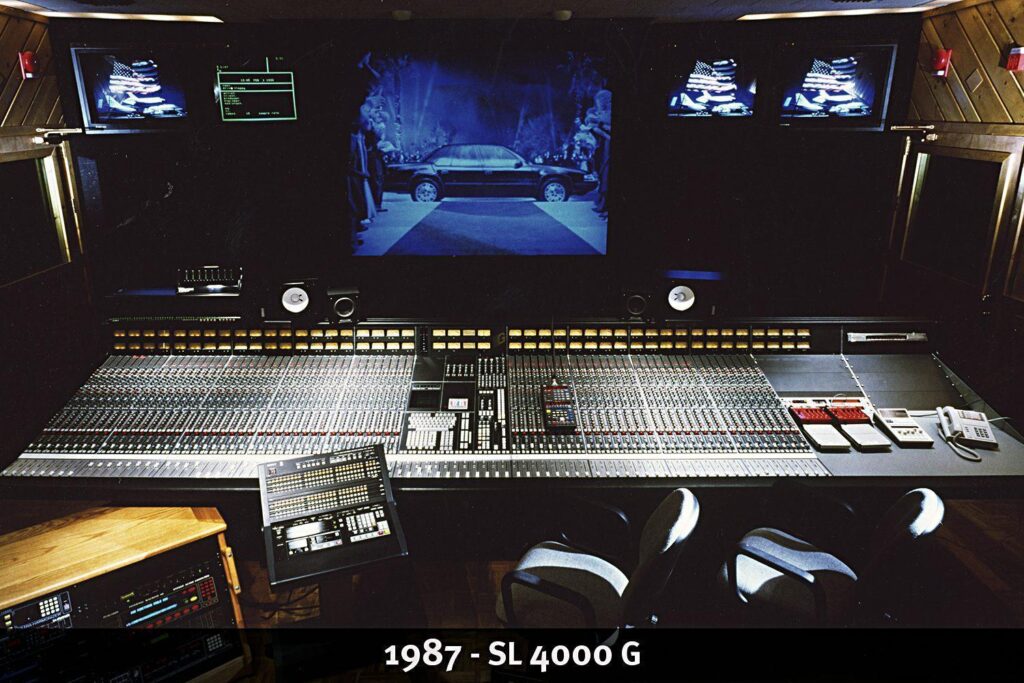
The SSL console was a massive piece of gear, weighing over 500 kilograms and stretching more than 3 meters wide. Combined with all the other hardware, the studio required a huge amount of physical space.
For MIDI sequencing, the studio used a Macintosh computer running a program called Opcode Studio Vision. Released in 1990, this was the world’s very first commercial DAW (Digital Audio Workstation) software.
It changed the music industry because it let you record and edit everything in one place. For the first time ever, an engineer could control electronic synth sounds and live audio, like vocals, on the exact same computer screen.
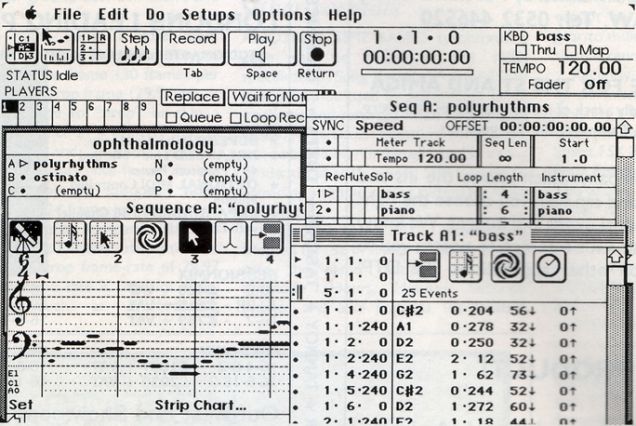
Later, he rented three more rooms on the 16th floor, right below the penthouse. In 1987, he officially opened Axis Studios to the public.
The facility now had four rooms in total. He kept the penthouse as his private room and used the other three rooms for paying clients.
The studio grew fast, eventually employing a staff of up to 20 people. Soon, the name Axis became known everywhere for the high-quality sound that major music stars wanted.
Here are some of Kevorkian’s music productions recorded at Axis Studios during its early days:
3. Chorus(1990)
In 1990, Deee-Lite released their debut album, World Clique. That same year, Depeche Mode released their hit album, Violator. Both groups had been using Axis Studios for recording and mixing sessions since 1989.
The massive success of these two albums immediately made Axis Studios famous around the world.
Deee-Lite – Groove Is In The Heart(1990)
Depeche Mode – Enjoy the Silence(1990)
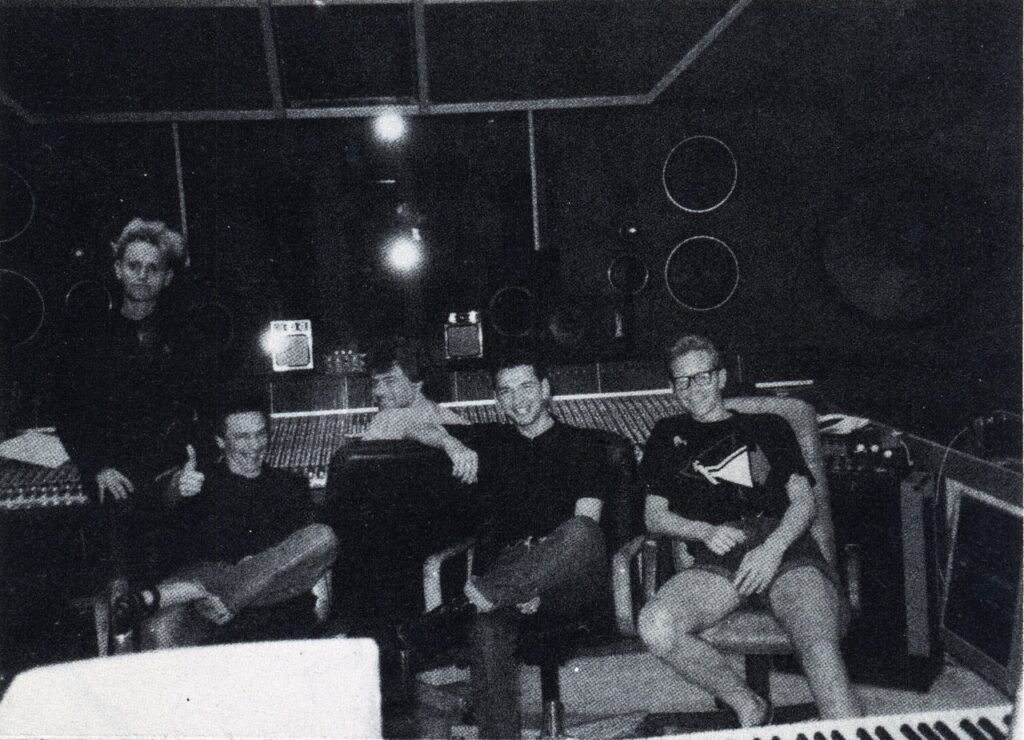
After that, the studio started making hit after hit for the pop world, earning a reputation as one of the most successful recording studios in the industry.
Below are some of the huge hits recorded and mixed at Axis Studios, even though Kevorkian himself was not directly involved in making them. (Producers are marked with a “P”.)
Specifically, C+C Music Factory‘s “Gonna Make You Sweat (Everybody Dance Now)” was released by Columbia Records and became a giant hit. The track climbed all the way to No. 1 on the Billboard charts.
This song single-handedly pushed underground house music straight into the mainstream market. Its success caused a huge wave of house-style beats and electronic remixes to take over the pop world.
C+C Music Factory – Gonna Make You Sweat (Everybody Dance Now)(1990)
Madonna – Justify My Love(1990)
Mariah Carey – Emotions(1991)
※Mariah Carey’s later hits, like “Honey” and “Fantasy” (the Def Mix club versions), were mostly recorded a few blocks away at Quad Recording Studios. However, Axis Studios was still used to program some of the background beats and electronic MIDI layers for “Honey.”
Michael Jackson – Dangerous(1991)
※ While the vast majority of the track was crafted at Larrabee in LA, a portion of the programming and MIDI work was done at Axis Studios.
Madonna – Erotica(1992)
Bobby Brown – Humpin’ Around(1992)
Mary J. Blige – Real Love(Hiphop Club Mix)(1992)
P: Sean “Puffy” Combs、Rap part by Biggie Smalls
Happy Mondays – Stinkin Thinkin(1992)
SWV – Right Here(Human Nature Radio Remix)(1992)
※ Produced by Teddy Riley; the rap section features a teenage Pharrell Williams
The Neville Brothers – Fly Like An Eagle(12inch Mix)(1992)
Björk – Big Time Sensuality(Fluke Minimix)(1993)
Whitney Houston – I’m Every Woman(Clivillés & Cole Remix)(1993 )
4. Breaks(1991)
Countless house songs and albums released on major record labels—as well as high-quality indie vinyl singles — had the Axis Studios sound all over them.
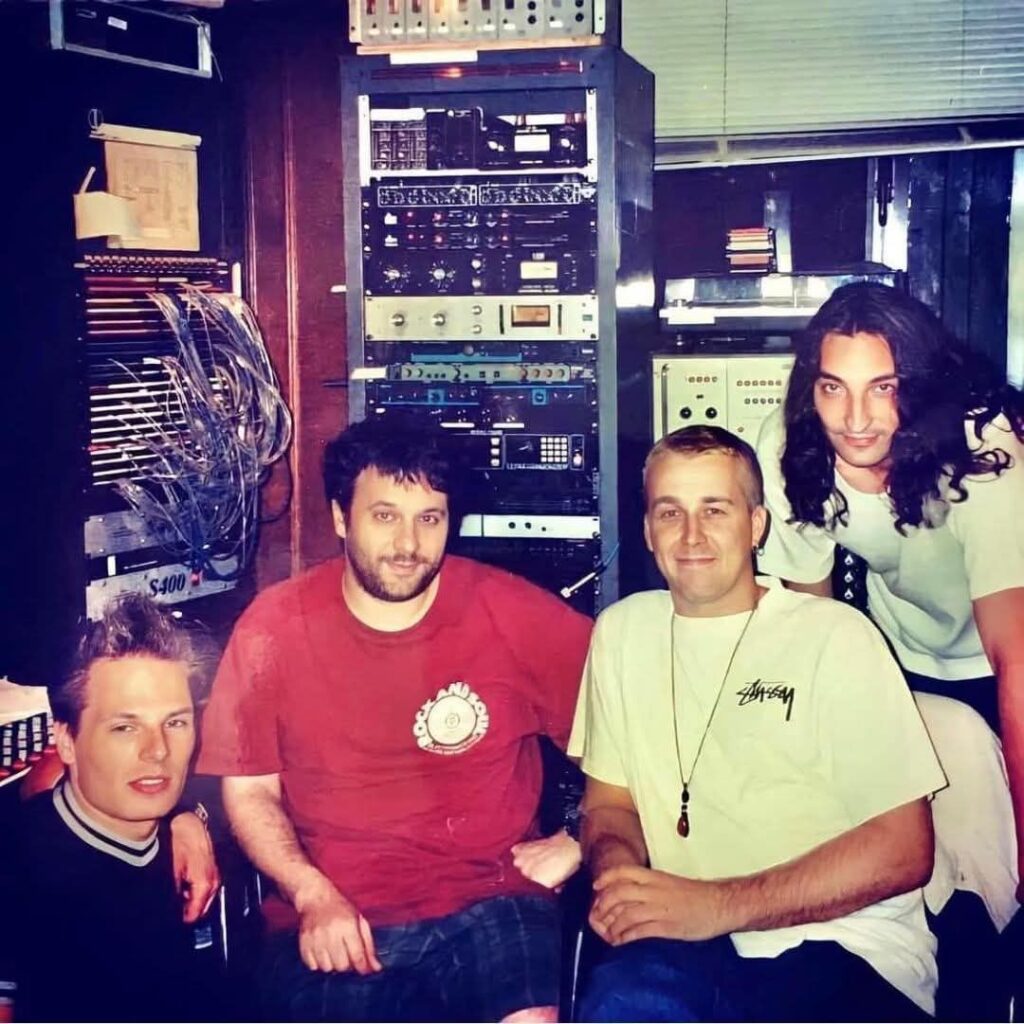
People in the music industry knew a common secret: while an artist might record their main vocals and instruments at other studios, they brought their tracks to the 16th floor of Axis Studios to finish them. It was simply the best place in New York to get a powerful, high-quality club sound.
Inside Room A, they used a very precise speaker setup. For the big main speakers, they installed legendary Urei 813B and Augspurger systems, alongside smaller Yamaha NS-10 monitors.
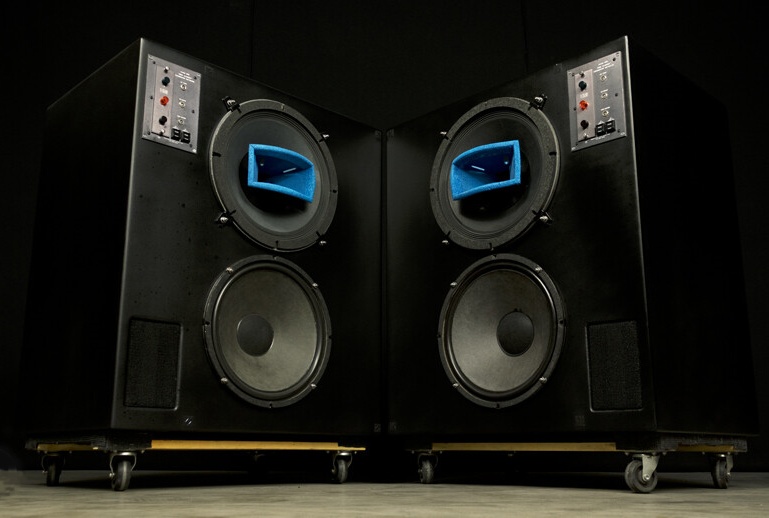
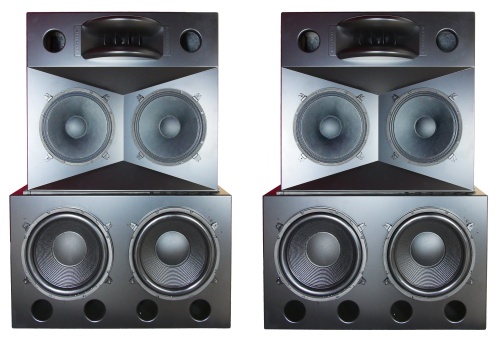
With this specialized listening setup, Kevorkian’s team of engineers — who deeply understood both major-label standards and raw club culture — could easily take a rough, D.I.Y. track and elevate it into a polished hit ready for radios and clubs worldwide.
Frankie Knuckles – The Whistle Song (1991)
※ Famous album tracks like “The Whistle Song” and “Rain Falls” were finished by Eric Kupper and John Poppo right inside Axis Studios. While early versions started at Arthur Baker’s Shakedown Sound studio, the album was fully put together and overdubbed at Axis. Interestingly, Russell Elevado — who later became famous for mixing D’Angelo and Erykah Badu — worked on this album as a young assistant engineer.
Clivillés & Cole – A Deeper Love(B2 A Deeper Feeling Mix)(1991)
Lil’ Louis & The World – Club Lonely(1992)
※ While the original dance singles were recorded across different studios, Axis Studios was brought in to seamlessly piece together and finish the full album.
Aly-Us – Follow Me(1992)
Ce Ce Peniston – Finally(1992)
Barbara Tucker – Beautiful People(Radio Edit)(1994)
※ The Radio Edit and several club mixes were finalized at Axis Studios
Everything But The Girl – Missing(Todd Terry Club Mix)(1994)
Dangerous Minds – Live In Unity(Deep Zone Mix)(1995)
P: Matthias Heilbronn+Mike Delgado/except for Down & Dirty Mix in NCP Studio
Boris Dlugosch present Booom! feat. Inaya Day – Keep Pushin‘(1996)
Byron Stingily – Get Up Everybody(1997)
Celeda, Danny Tenaglia – Music Is The Answer(1998)
5. Bridge
Back then, there were two main ways to get a house record released.
The first option was the “cheap and lightning-fast” route. A producer would make a track using a simple bedroom setup or a cheap budget studio. Then, they would take the finished tape straight to local independent labels like Strictly Rhythm, Nervous, or Freeze. The label would immediately cut a lacquer disc, press the music onto vinyl records, and have them sitting on store shelves just two or three days later.
The flood of house vinyl singles coming out at a fast pace during the ’90s had a loud, gritty, and raw sound. This was because the music was self-released, put out exactly the way the producer created it. The final sound was left completely up to the engineer cutting the lacquer disc.
The second option was the “high-budget, slow-burn” route. A producer would make a demo song at home, save the MIDI data onto a floppy disk, and bring it into a premium studio like Axis or Unique. While paying top dollar, professional engineers would clean up the background noise and mix the tracks on the large SSL console to give it a clean, sharp sound.
Finally, they recorded the music onto analog master tape before giving it to the record company. This process took much longer. The record would come out a few weeks later — or in the case of major labels, several months down the line.
Of course, these high-budget tracks still went through a final mastering session when the lacquer disc was cut. However, all the fine-tuning and detailed audio adjustments were already completely locked in at the studio stage.
Because this expensive method required a lot of money, it resulted in a very clear, premium sound. If you listen to these two different styles of music today through compressed MP3 files, they might sound almost identical. But when you play them on a physical 12-inch vinyl record, the difference is undeniable. Anyone who has been listening to dance music since the vinyl days can spot the superior sound quality immediately.
In other words, Axis Studios was the missing link. It provided the advanced technology needed to transform a raw, self-released club record into a polished pop hit ready for the radio and MTV.
After all, even underground heroes like Masters At Work or Todd Terry were used to making tracks at home with that loud, gritty sound. But the second a major record label knocked on their door with a big budget, they would run straight to Axis yelling, “Monsieur K, help me!”
They knew that cheap bedroom gear alone simply could not create a clean, commercial version ready for worldwide radio.
Before he passed away, Frankie Knuckles often mentioned that his production team, Def Mix, used the exact same professional session musicians as Mariah Carey. This was not a coincidence. It happened because David Cole and Robert Clivillés (the duo behind C+C Music Factory) were long-time close friends with David Morales.
On top of that, the C+C duo treated Axis Studios like their own personal workspace. They recorded and produced Mariah’s hit albums and singles right there in the building.
This powerful musical circle started back in the 1980s. David Morales first met Clivillés, Cole, and tape-editor Chep Nuñez at a famous New York club called Better Days, where they instantly clicked.
They started DJing and making music together, eventually forming a four-man group called “2 Puerto Ricans, a Blackman and a Dominican.” Under that unique name, they dropped killer tracks like “Do It Properly” in 1987 and “So Many Ways” in 1988.
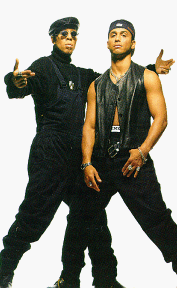
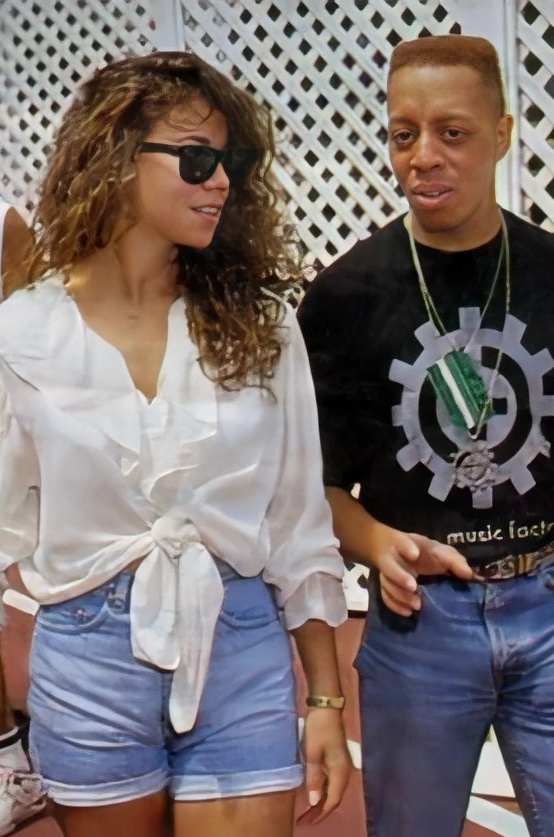
Right after that, the C+C duo blew up in 1990 with “Everybody Dance Now” and immediately started working on Mariah Carey’s music.
Aside from the duo and Mariah herself, a whole team of top-tier background singers like Trey Lorenz, Cindy Mizelle, and Melonie Daniels were at Axis every single day recording tracks. Mariah’s trusted main engineers, John Poppo and Dana Jon Chappelle, were also there constantly. David Morales would always drop by to hang out, becoming very close friends with the whole group.
Because of this bond, the C+C duo actively helped Morales build his career as a producer. This close relationship explains why everything connected so perfectly. It is the reason why Trey Lorenz sang on Def Mix’s hit song “Rain Falls,” and why Mariah’s personal studio engineers began working on music projects for the Def Mix team as well.
C+C Music Factory hit No. 1 in America, making them feel like huge, mainstream pop producers. But at the end of the day, they were still just DJ buddies hanging out with Morales. Robert Clivillés is Puerto Rican, meaning he and Morales were the literal “2 Puerto Ricans” from their early group.
Sadly, the other half of the duo, David Cole, passed away from AIDS complications in 1995. His death effectively brought an end to C+C Music Factory. If he were still alive today, the position of house music in the mainstream pop scene might look completely different.
Axis was not just a technical game-changer. It was a goldmine of talented people who helped house music make a giant leap from the underground straight into the big leagues.
Beyond Frankie, Morales, MAW, and Todd Terry, the guest list at Axis Studios included almost every major star in house music. Legends like Larry Levan, Satoshi Tomiie, Eric Kupper, Mike Delgado, Tony Humphries, Danny Krivit, Joe Claussell, Kenny Carpenter, Junior Vasquez, Kazuhiko Gomi, Hex Hector, George Morel, and Danny Tenaglia all spent time there.
It is safe to say that pretty much every big-name New York house DJ stopped by Axis regularly — even if they did not have any studio work booked. They came because the 17th-floor penthouse balcony was the ultimate hangout spot. It was the perfect place for the entire house music scene to meet up, relax, and talk to each other.
According to True House Stories — an interview series by Lenny Fontana that documents house music legends — Axis had a welcoming “Open Door” policy. Anyone could easily drop by, making the studio a true sanctuary for creativity and hanging out.
Another major reason DJs were always hanging around was the studio’s perfect location. Axis Studios was just a short walk away from Frankford/Wayne Mastering Labs, sitting on the exact same block. If you look at the best-sounding New York house records from the ’90s, a giant portion of them had their physical vinyl lacquers cut right there at Frankford/Wayne.
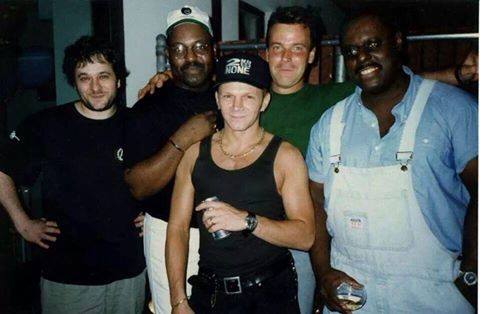
Axis Studios was known as one of the most expensive studios around back then. It could cost hundreds of dollars an hour, or over $2,000 to book it for a full day, which was completely out of reach for a regular house DJ.
However, Kevorkian would often give his friends a special discount. He let them rent the rooms for very cheap during off-hours, like late nights and weekends.
On top of that, whenever a big project paid for by a major record label finished early, the producers would frequently use the remaining paid hours to work on their own low-budget music.
Through these clever methods, the independent house music scene was secretly able to create high-quality tracks using incredibly expensive gear.
6. Hook(1995)
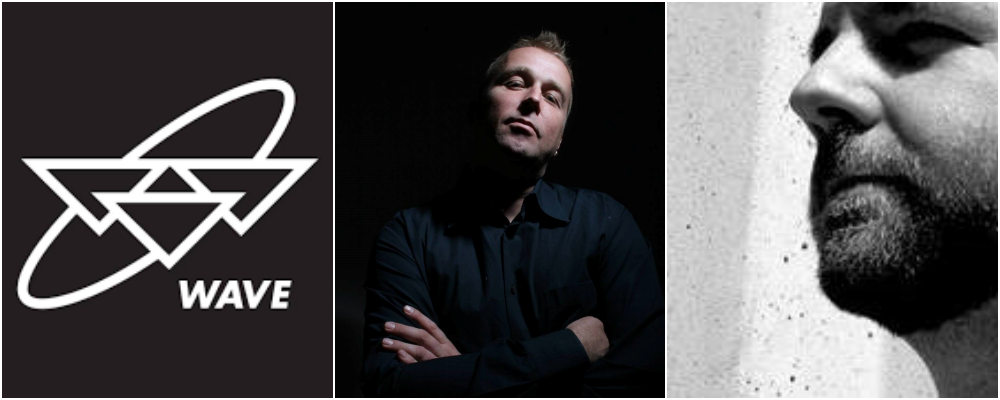
By the early 1990s, Kevorkian was back behind the decks, restarting his career as a DJ. In 1995, he launched his own independent record label, Wave Music.
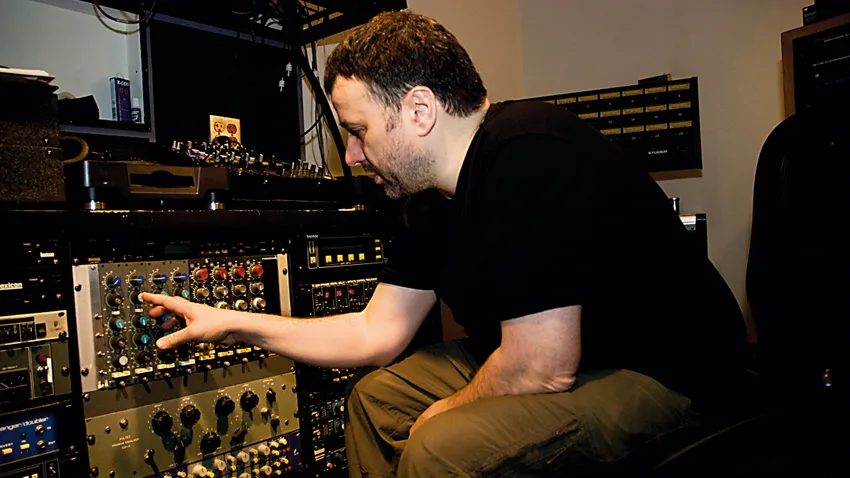
He began using the SSL 4000 G-Series console in a completely unique way. Even though this large mixing board normally cost top dollar for major-label projects, Kevorkian treated it like a musical instrument. By playing the console faders live and using tools like Lexicon 480L reverb units, he began creating deep, atmospheric tracks filled with hypnotic dub elements.
He also opened up Axis Studios’ high-end facilities to artists he selected himself, releasing their music on Wave Music. No matter the genre — whether it was house, jazz, or techno — Wave Music records had a completely different vibe from everything else in stores. They were famous for a uniquely spacey, crystal-clear sound quality filled with deep dub echoes.
Axis Studios’ chief engineer, Matthias Heilbronn, was François’ right-hand man and the studio’s true secret weapon. Originally from Germany, this key player behind the “Axis Sound” was a major force in the building. He created excellent remixes under his II Deep name, released his own self-produced music, and handled the engineering duties for Deep Dish’s famous early remixes.
The studio was also home to a talented team of top-tier engineers like Rob Rives and Mike Callaghan. These engineers worked constantly behind the mixing boards to maintain the precise, high-quality audio of Kevorkian’s ideal “Axis Sound.”
François K. – Hypnodelic(1995)Featured on the FK EP
The Beloved – Three Steps To Heaven(Deep Dish Remix)(1996)
Abstract Truth – Get Another Plan(1996)
Matthias Heilbronn – Do It Right(1997)
Azymuth – Jazz Carnival(Global Communication Space Jazz Mix)(1997)
Kevin Aviance – Din Da Da(1997)
8. Outro(1997)
In 1996, Kevorkian teamed up with Danny Krivit and Joe Claussell to launch “Body & Soul”. This famous Sunday party was held at a club called Vinyl in the Tribeca neighborhood of New York City.
Kevorkian developed a strict weekly routine around the party. He would spend all week mixing down new tracks at Axis Studios, and on Fridays, he would burn the final mixes straight onto test CDs. On Sundays, he would take those fresh CDs to Body & Soul to test them out on the club’s massive sound system and watch how the dancers reacted.
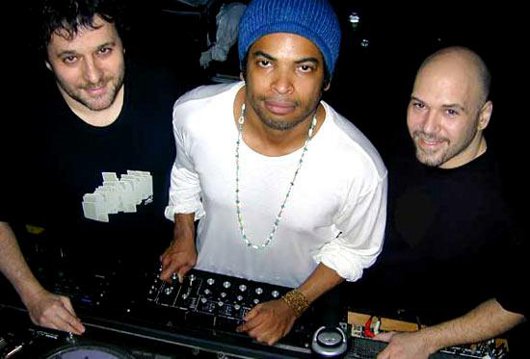
In 2001, Axis Studios shut down its commercial operations. Kevorkian gave up the leases on the three rooms on the 16th floor. He cut down his studio equipment to a bare minimum and moved everything back up to the 17th-floor penthouse. With this move, the space returned to its original roots as Kevorkian’s personal, private workspace.
This transition was heavily driven by the rise of computer software. The music industry was shifting away from expensive studio sessions centered around giant SSL consoles. Instead, solo musicians were moving toward “In The Box” digital production, running programs like Pro Tools or Logic on Apple Macintosh computers.
As software audio plug-ins rapidly improved, the commercial demand for traditional high-end recording facilities simply dried up.
After Axis moved out, Gus Garces’ Double Platinum Studios took over the spaces on the 16th floor. The large SSL console from Room A was sold directly to this new studio setup.
Double Platinum quickly became a popular recording home for major hip-hop labels like Roc-A-Fella and Bad Boy Records. The studio drew in heavyweights from the New York rap scene, including Damon Dash, Beanie Sigel, and The Lox.
After the owner, Gus, passed away in 2012, the space changed completely. The recording rooms were converted into a rehearsal studio to serve the theater downstairs.
In 2003, Kevorkian launched a new party called “Deep Space” at Cielo, a famous club located in the Meatpacking District. Embracing a laptop-based DJ setup running Traktor software, he built the entire night around a deep “dub” concept. He used the digital system to weave together house, techno, reggae, and drum ‘n’ bass.
Cielo was one of the earliest nightlife venues to install a legendary Funktion-One sound system. The club featured a powerful subwoofer setup that was specifically tuned to deliver Kevorkian’s signature heavy dub bass to its absolute maximum potential.
In January 2019, Cielo permanently closed its doors. Kevorkian then launched his own digital music program, “World of Echoes,” on the streaming platform Twitch. Utilizing his collection of vintage hardware and studio effects gear originally housed at Axis Studios, he began broadcasting live, real-time dub mixes straight to his online community.
Due to a shift in Twitch’s music copyright policies, the show has now officially moved to Mixcloud Live, with the full video archives uploaded onto YouTube.
While it might look like he is playing music in a tight, cramped room on screen, that space is actually the original 17th-floor penthouse studio. It is the very top floor of the exact same building as Studio 54 that we have been tracking this entire time.
While hidden from the screen, just behind the camera lies a breathtaking, panoramic view of the Manhattan skyline, looking straight down over the iconic Broadway Theater District.
His current streaming setup features Traktor Pro 4 as the main software, alongside two Traktor Kontrol D2 controllers, a Native Instruments Kontrol S4 MK3, and an Allen & Heath Xone:92 (or Xone:96) mixer.
This rigorous layout essentially replicates the complex, multi-track mixing process he used to run back in the peak days of Axis Studios — now scaled down into a modern, highly portable digital setup.
In several episodes, cat-themed items are scattered around the screen or clips of cat animations are inserted directly into the broadcast. This is because the studio is home to an actual cat named Zezé, who serves as Axis’s official studio manager and co-producer.
Outside of Body & Soul, François Kevorkian frequently plays sets that veer far away from house music. However, by shifting the focus away from looking for a standard house beat, and instead tuning into his overall world-building and acoustic echoes, his music suddenly becomes incredibly accessible and a joy to listen to.
Even though he is widely celebrated as a DJ and producer, what he truly wants to achieve is the reshaping of the community that David Mancuso and Larry Levan originally built.
Reading between the lines of his countless past interviews, it becomes completely clear that his ultimate soundscape for that community is, and always has been, the Axis Sound.
Kevorkian has never publicly explained the origin of the studio’s name. However, it is widely believed in the music community to be a nod to Jimi Hendrix’s iconic 1967 album title, Axis: Bold as Love.
The word “Axis” comes from a Latin root meaning axle, which historically referred to a pivot pin, central spindle, or the rod connecting the wheels of a wagon — the mechanical shaft.
From that concept, the ancient Greeks began imagining it as a celestial line set in motion to turn the universe. Today, the English word “Axis” is used to describe an invisible central line of rotation in math and physics — the literal core, center point, or pivot around which everything revolves.
Back in the ’90s, when New York house music were bursting with raw energy, a diverse team of talents gathered to realize the full potential of dance music. Axis Studios sat right at the dead center of it all.
While few people today remember its existence, taking the time to dust off and listen to the music born from that space is a special experience. Perhaps, with the secret history of Axis Studios finally unraveled, those old-school ’90s tracks will sound a little bit different next time.